
Education
Preparing for your first visit with the veterinarian
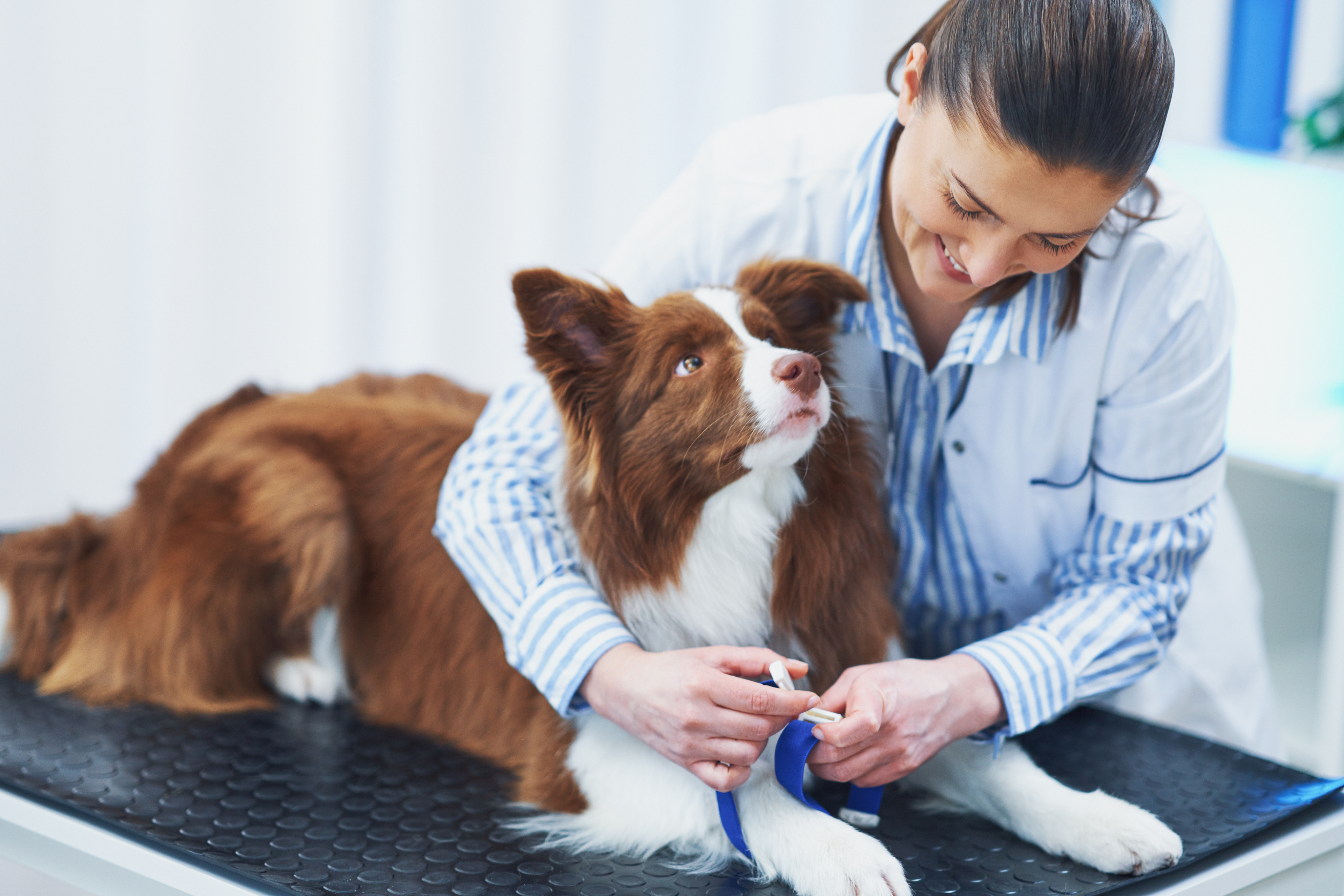
Congratulations on your new addition and for prioritizing your pet’s health. To help you prepare for your pet’s first visit, here is some information to consider. While every clinic is different, these resources should give you a better idea of what to expect on this big day.
Share the article:
What are the goals of the first veterinary visit?
As you introduce your new pet into your home, you’ll want to make your first trip to the veterinary clinic as soon as possible (ideally within a few days). A lot could happen at that first visit, but it is a great time to lay a positive foundation for your pet’s future care. Here are some goals to keep in mind:
- Help your pet feel comfortable with trips to the veterinary clinic
- Ascertain your pet’s health & behaviour baseline
- Ask important questions about pet care
Goal #1: Help your pet feel comfortable at every step of their visit, from home to the clinic1,2,3
Schedule strategically. Consider your pet’s behaviour, and request an appointment at a time of day when your pet tends to be calm & relaxed.
Prepare for the visit
- Get them used to handling – Gently touch their paws, ears, and mouth at home to make physical examination by the veterinary team easier.
- If you use a pet carrier, make it a safe space.
Add treats or a familiar-smelling towel or blanket.
For cats, cover the carrier with a light towel to block visual stressors. - Start basic training – Commands like “sit” and “stay” can help during check-ups.
- Bring comfort items – A favourite toy can ease anxiety.
In the waiting room
- If your pet is nervous around other animals, ask the clinic if you can wait outside or in the car until your appointment time.
- Keep your pet in a pet carrier or close to you. Your pet may feel safer if they do not have to interact with strangers.
- Position your pet so that they are not facing other animals.
- Talk to your pet in a calm, reassuring tone.
During the appointment
- Provide your pet with positive reinforcement when they are cooperative, using touch and speaking with an affirming tone.4,5
Your veterinary team is your go-to for your pet’s health
From information about vaccinations and health conditions to medications and preventive care, your veterinary team is your best resource. Be sure to tap into that expertise, and schedule regular visits.
Goal #2: Ascertain a health & behaviour baseline2,3
A great first step is for the veterinarian to get to know what’s normal for your pet.
During the first visit, the veterinarian may:
- Review any previous health records, including immunization records and treatment history. Don’t forget to bring this with you!
- Perform a complete physical examination of your pet, including listening to the heart and lungs.
- Check for parasites and other health conditions; both a stool sample and a blood sample could be needed.
- Administer required vaccines based on your pets age, health and lifestyle. It is important to note that in some cases a booster vaccination may be required a few weeks later.
Goal #3: Ask important questions about pet care6,7,8
Planning for pet care
- What do I do if my pet needs after-hours care? Where are the closest emergency services?
- What does routine veterinary care entail (vaccinations, wellness checkups)?
- If my pet needs medication, how do I administer it? How often?
- What are common parasites in the area? How can I prevent them?
- Should my pet be spayed or neutered?
Care for behaviour & lifestyle
- How often should they poop and pee? How should the poop look?
- How much exercise and sleep are the right amounts?
- What should I feed my pet? How does it change at different life stages?
- Any breed-specific information I should know?
- Do you recommend microchipping?
- Does my pet require regular grooming?
In the spotlight
5 tips for hiking safely with your dog
Whether you’re a seasoned hiker or about to start your first trail, follow these tips to keep your dog comfortable and safe.
Vaccinations for dogs
Help protect your dog’s health by staying current with their vaccinations.
Vaccinations for cats
Help protect your cat’s health by staying current with their vaccinations.
Five hot tips for summer pet care
Hot weather can be hard on pets. Stay informed and keep them safe this summer with these five tips.
Pet Travel Guide: Health & Safety Tips
Here are some things to consider before your next trip with your furry friend.
Why a long-term relationship with your veterinarian matters
Building a long-term relationship with your veterinarian is one of the most practical things you can do for your pet’s health.
Making a treatment plan — and sticking to it
Work with your veterinarian to build a plan that fits both your pet’s needs, and your everyday routine.
Pet ear infections
Understanding common symptoms can help you spot ear infections in your dog or cat.
Caring for a Senior Pet
Cats and dogs may need special attention as they age, so it helps to understand what to expect as your pet gets older.
Why won’t my pet stop scratching
Understand the common causes of scratching in dogs and cats.
Are you looking for a veterinarian?
Your veterinarian plays an essential role in ensuring the good health of your dog or cat. Find a professional near you!
References
- American Kennel Club. “Puppy First VeterinarianVisit.” American Kennel Club, https://www.akc.org/expert-advice/puppy-information/puppy-first-vet-visit
- VCA Canada “Preparing for Your Dog’s First Veterinary Visit.” VCA Canada, https://vcacanada.com/know-your-pet/preparing-for-your-dogs-first-veterinary-visit
- BetterPet. “Your First VeterinarianVisit.” BetterPet, https://www.betterpet.com/learn/your-first-vet-visit
- American Veterinary Society of Animal Behavior. “What are Reward-Based Training Methods for Dogs (and Cats)?” American Veterinary Society of Animal Behavior, https://avsab.org/what-are-reward-based-training-methods-for-dogs-and-cats/
- Danks, Lee. “Lessons in Positive Reinforcement.” Veterinary Practice, https://www.veterinary-practice.com/article/lessons-in-positive-reinforcement
- MSD Veterinary Manual. “Special Pet Topics.” MSD Veterinary Manual, https://www.msdvetmanual.com/special-pet-topics
- Shaw, Jane R., et al. “Veterinarian-Client-Patient Communication during Wellness Appointments versus Appointments Related to a Health Problem in Companion Animal Practice.” Journal of the American Veterinary Medical Association, vol. 233, no. 10, 15 Nov. 2008, pp. 1576–1586, https://doi.org/10.2460/javma.233.10.1576.
- AVMA. “Ways to Make Veterinary Visits Better for Everyone.” American Veterinary Medical Association, https://www.avma.org/resources/pet-owners/yourvet/10-things-you-can-do-make-veterinary-visits-better-everyone.
Wag-worthy updates!
Subscribe to our newsletter for pet information and advice.
*By entering my email address and clicking the “Submit” button, I authorize Merck Animal Health to use my email address for the purpose of sending me communications by email about products, promotions and educational articles. I understand that my email address will be accessible for this purpose to a limited number of Merck Animal Health’s employees, agents and representatives. I also understand that I can unsubscribe at any time. I agree to the Merck Animal Health privacy policy. Contact us for more information.


 Go To United States
 Algeria
 Argentina
 Australia
 Austria
 Bahrain
 Belgium (Dutch)
 Brazil
 Canada (English)
 Chile
Chile Colombia
 Croatia
 Czech Republic
 Denmark
 Ecuador
 Egypt
Egypt Finland
 France
 Germany
 Greece
 Hungary
 India
India Indonesia
 Iraq
Iraq Ireland
 Israel
 Italy
Italy Japan
Japan Jordan
 Kuwait
 Lebanon
 Malaysia
 Mexico
 Morocco
 Netherlands
 New Zealand
 Norway
 Oman
Oman Panama
 Peru
Peru Philippines
 Poland
 Portugal
 Qatar
Qatar Romania
 Russian Federation
 Saudi Arabia
 South Africa
 South Korea
 Spain
Spain Sweden
 Switzerland (French)
 Taiwan
 Thailand
 Tunisia
 Turkey
 Ukraine
 United Arab Emirates
 United Kingdom
 Uruguay
 Yemen
Yemen Global
You are now leaving merck-animal-health.ca, a site maintained by Merck Animal Health Canada
The link is provided for your convenience only.
Merck Animal Health makes no warranties or representations of any kind as to the accuracy, completeness, reliability or usefulness of any information contained in third party sites and shall have no liability for any loss or damage of any kind that may arise from your use of such content or information.
Inclusion of any third party link does not imply an endorsement or recommendation by Merck Animal Health.