
EDUCATION
How often should a cat go to the veterinarian?
Cats may be independent, but they still need visits to the veterinarian to stay healthy.
Share the article:
Key takeaways
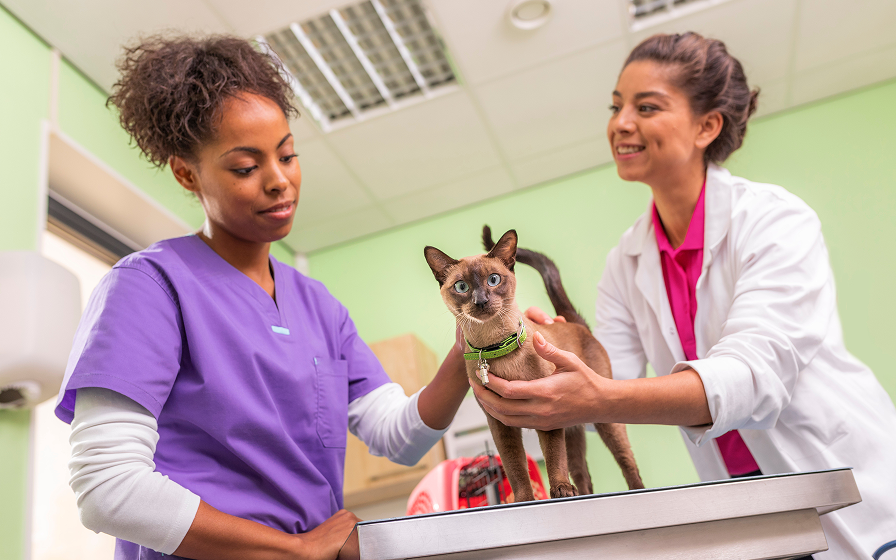
Cats are such independent creatures that many people assume that as long as they have a cozy bed, water and food, that they are maintenance-free. Yet at different ages and stages of life, cats have real health needs — and regular veterinary care can make a meaningful difference.
Quick reference
Your veterinarian is the best guide for what visit schedule is right for your individual cat. Remember that every cat is different, and your veterinarian may recommend more or less frequent visits depending on your cat’s health, lifestyle, and resources available to you. If you’re preparing for your cat’s first visit, see more information on what to expect here.
As a general guide, your cat should have the following routine veterinary visits:
- At age 6-8 weeks for initial vaccinations and a first check-up
- Every 3 to 4 weeks afterward, up to 16–20 weeks of age, for follow up vaccinations, other treatments, and preventative care
- At approximately 6 months of age for spaying/neutering and microchipping
- At least one wellness examination per year is recommended for all cats, however, the frequency of these visits may increase based on your pet’s individual needs
Regardless of age, if your pet shows any signs of illness or abnormal behaviour, contact your veterinarian promptly and describe the symptoms — don’t wait for the next scheduled check-up. Some examples are listed below, but keep in mind that this list is not exhaustive. When in doubt, it’s always best to check in with your veterinarian.
- Abnormal signs & symptoms — coughing, sneezing, runny nose, frequent vomiting etc.
- Digestive changes — greater or diminished eating, drinking, urination, or defecation; unexplained weight loss etc.
- Skin and coat changes — excessive licking or grooming, bald spots etc.
- Behavioural changes — howling, increase or decrease in activity or sleeping, avoiding the litter box etc.
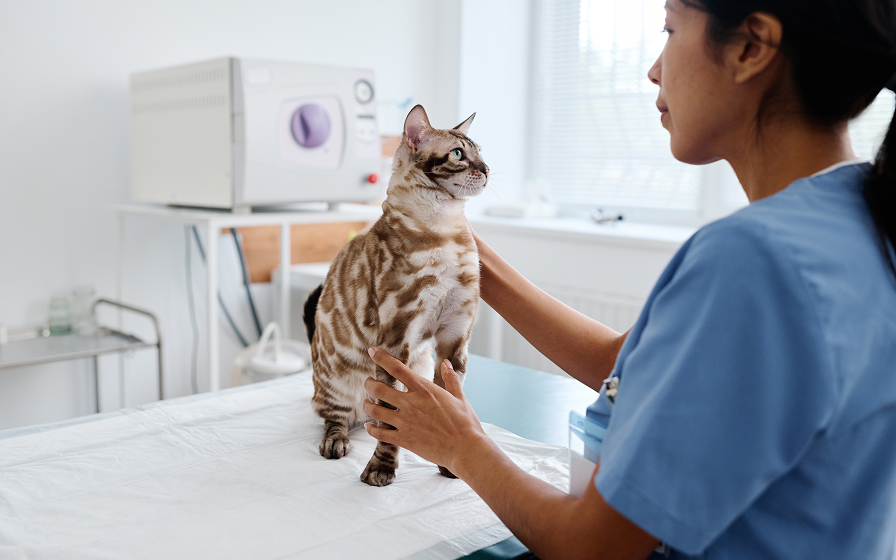
Tips to make veterinary visits easier:
Help your cat feel at ease with veterinary visits by making their carrier a place to play with a toy or receive a treat. You can also keep your cat’s carrier available near one of their favourite resting or play places so that your cat doesn’t immediately associate the appearance of the carrier with a trip to the veterinarian.

Giving a kitten a good start
Newborn kittens receive antibodies through their mother’s milk that temporarily protect them from infectious diseases. Because that immunity doesn’t last, you should begin the kitten vaccination series around 6 weeks of age, and continue with a series of boosters to build lasting protection. Vaccines fall into two categories: core and non-core vaccines. Your veterinarian will recommend the right vaccines and schedule based on your kitten’s individual needs. Find out more about core & non-core vaccines for cats here.
Things to discuss at your kitten’s veterinary visits
- Core and non-core vaccines, and the appropriate schedule.
- Additional preventive medications (e.g., parasite control medications)
- When to spay or neuter and microchip your kitten, which commonly occurs around six months of age
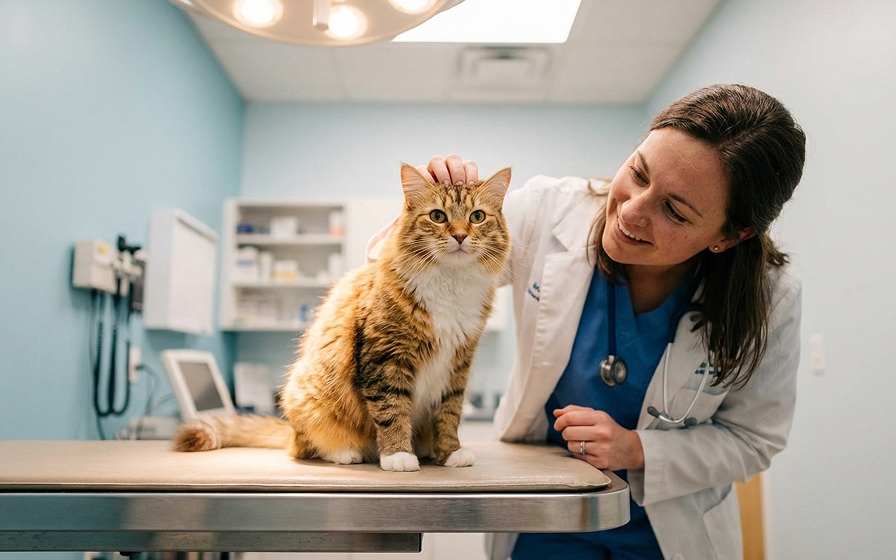
An adult cat’s annual check-up
Cats often mask signs of illness, and even indoor cats benefit from a regular wellness exam. By examining your cat at least once yearly, your veterinarian can observe changes and recommend additional testing to determine your cat’s overall wellbeing or potential signs of disease. Early diagnosis and treatment are important for supporting your cat’s health and longevity. The annual or twice-annual check-up is also an opportunity to make sure your cat’s vaccinations are up to date. For more on vaccines for cats, click here.
Things to discuss at your adult cat’s visits to the veterinarian
- Core and non-core vaccines, and the appropriate schedule.
- Additional preventive medications (e.g., parasite control medications)
- Any concerning changes in your cat’s habits, behaviour, or appearance; any clinical signs that might indicate medical problems
- Any questions you may have about maintaining your cat’s overall health

Senior cats deserve special care
As your cat reaches their senior years, a twice-yearly check-up can ensure they remain in the best possible condition. Subtle changes in behavior — such as changes in grooming, changes in mobility, or hiding in unusual places — can be early signs of an age-related problem. For more information on caring for your senior cat, see here.
Things to discuss at your senior cat’s visits to the vet
- Core and non-core vaccines, and the appropriate schedule
- Additional preventative medications (e.g., parasite control medications)
- Any concerning changes in your cat’s habits, behaviour, or appearance; any symptoms that might be a hint of medical problems
- Appropriate diet and activity levels for your senior cat
- Any questions you may have about maintaining your cat’s overall health and comfort as they age
In the spotlight
Be Prepared with a Pet Emergency Card
Keeping your pet’s important medical information in one place can help you to quickly share details with the veterinary team and support clear communication during an emergency.
5 tips for hiking safely with your dog
Whether you’re a seasoned hiker or about to start your first trail, follow these tips to keep your dog comfortable and safe.
Vaccinations for dogs
Help protect your dog’s health by staying current with their vaccinations.
Vaccinations for cats
Help protect your cat’s health by staying current with their vaccinations.
Preparing for your first visit with the veterinarian
Congratulations on your new addition and for prioritizing your pet’s health. To help you prepare for your pet’s first visit, here is some information to consider.
Five hot tips for summer pet care
Hot weather can be hard on pets. Stay informed and keep them safe this summer with these five tips.
Pet Travel Guide: Health & Safety Tips
Here are some things to consider before your next trip with your furry friend.
Why a long-term relationship with your veterinarian matters
Building a long-term relationship with your veterinarian is one of the most practical things you can do for your pet’s health.
Making a treatment plan — and sticking to it
Work with your veterinarian to build a plan that fits both your pet’s needs, and your everyday routine.
Pet ear infections
Understanding common symptoms can help you spot ear infections in your dog or cat.
Are you looking for a veterinarian?
Your veterinarian plays an essential role in ensuring the good health of your dog or cat. Find a professional near you!
Wag-worthy updates!
Subscribe to our newsletter for pet information and advice.
*By entering my email address and clicking the “Submit” button, I authorize Merck Animal Health to use my email address for the purpose of sending me communications by email about products, promotions and educational articles. I understand that my email address will be accessible for this purpose to a limited number of Merck Animal Health’s employees, agents and representatives. I also understand that I can unsubscribe at any time. I agree to the Merck Animal Health privacy policy. Contact us for more information.



 Go To United States
 Algeria
 Argentina
 Australia
 Austria
 Bahrain
 Belgium (Dutch)
 Brazil
 Canada (English)
 Chile
 Colombia
 Croatia
 Czech Republic
 Denmark
 Ecuador
 Egypt
 Finland
 France
 Germany
 Greece
 Hungary
 India
 Indonesia
 Iraq
 Ireland
 Israel
 Italy
 Japan
 Jordan
 Kuwait
 Lebanon
 Malaysia
 Mexico
 Morocco
 Netherlands
 New Zealand
 Norway
 Oman
 Panama
 Peru
 Philippines
 Poland
 Portugal
 Qatar
 Romania
 Russian Federation
 Saudi Arabia
 South Africa
 South Korea
 Spain
 Sweden
 Switzerland (French)
 Taiwan
 Thailand
 Tunisia
 Turkey
 Ukraine
 United Arab Emirates
 United Kingdom
 Uruguay
 Yemen
 Global
You are now leaving merck-animal-health.ca, a site maintained by Merck Animal Health Canada
The link is provided for your convenience only.
Merck Animal Health makes no warranties or representations of any kind as to the accuracy, completeness, reliability or usefulness of any information contained in third party sites and shall have no liability for any loss or damage of any kind that may arise from your use of such content or information.
Inclusion of any third party link does not imply an endorsement or recommendation by Merck Animal Health.